A bottle of homemade blackcurrant cordial is a world away from shop squash: deep, tart and intensely fruity, and made from nothing but blackcurrants and sugar. A punnet of currants gives you weeks of cool, dark-purple drinks.
The trick to a really intense cordial is using barely any water, so the flavour isn't diluted. The recipe is below, with more on how cordials keep and the method for any soft fruit underneath it.
How to Make Blackcurrant Cordial: A UK Recipe
Makes About 750 to 900ml (one large bottle); needs 4 hours to overnight to strain
Prep
15 min
Cook
25 min
Total
40 min
Makes
About 750 to 900ml (one large bottle); needs 4 hours to overnight to strain
Ingredients
Fruit & liquid
To sweeten (added after straining)
Method
- 1
Put the blackcurrants and water in a large pan over a low heat.
- 2
Simmer gently for 20 to 30 minutes, until the berries have collapsed, crushing them with a potato masher to drive out the juice and colour.
- 3
Pour into a muslin-lined sieve or a jelly bag set over a bowl, and leave to drip for 4 hours or overnight. Don't squeeze the bag if you want a clear cordial.
- 4
Measure the strained juice, then return it to a clean pan with 300 to 350g of sugar for every 500ml of juice.
- 5
Heat gently, stirring, until the sugar has fully dissolved, but don't let it boil hard, or the natural pectin starts to set it towards jam.
- 6
Stir in the citric acid if using, and simmer for a minute or two.
- 7
Pour hot into warm, sterilised bottles and seal straight away. Cool, then refrigerate.
Cook’s notes
- Hands-on time is about 40 minutes; the straining then happens on its own over several hours.
- To serve, dilute roughly 1 part cordial to 4 or 5 parts still or sparkling water, or to taste.
- Freeze the surplus in an ice-cube tray, then bag the cubes and pull out a couple as you need them. You can also freeze the strained juice before sweetening and make the cordial later.
- The same method works for raspberry, blackberry or a mixed-berry cordial. Just dose the sugar against the juice volume.
- Sterilise bottles in a low oven (about 120°C) or a hot dishwasher cycle, and fill while both bottles and cordial are hot.
- Sugar is the preservative here, so don't cut it too far. Citric acid and a water-bath process of the sealed bottles push the shelf life towards a year.
What you’ll need
- Large pan
- Potato masher
- Muslin-lined sieve or a jelly bag
- Sterilised bottles
Troubleshooting
The cordial is cloudy.
The pulp was pressed while straining. Let the bag drip on its own next time, and for this batch strain it again or decant off the settled sediment.
It's fizzing or the lid is pushing up.
It's started to ferment, from an under-boiled syrup or unsterile bottles. Re-boil it, re-bottle hot into freshly sterilised bottles, add citric acid, and keep it chilled.
It's too thin and weak.
Too much water, or too little fruit. Use less water next time, or simmer the strained juice for a few minutes to concentrate it before adding the sugar.
It won't keep and spoils quickly.
Raise the sugar to at least 300g per 500ml of juice, add citric acid, and keep it refrigerated.
There's mould on the surface.
Fill the bottles to the brim, seal them hot, and refrigerate after opening. Discard any batch that shows mould.
More about fruit cordials
Sugar is the preservative. A high sugar concentration binds up the water so yeasts and moulds struggle to grow, which is why cordials keep and why cutting the sugar too far shortens their life.
Citric acid does two jobs. It sharpens and brightens the flavour, balancing the sweetness, and it lowers the pH so the cordial keeps longer. A squeeze of lemon does the same on a smaller scale.
One method fits almost any soft fruit. Simmer the fruit in a little water until it bursts, strain it through muslin (unpressed, for clarity), measure the juice, add sugar by volume at roughly 300 to 350g per 500ml, dissolve, and bottle it hot in sterilised bottles. It works for blackcurrant, raspberry, blackberry, strawberry or a mixture.
Minimal water means maximum intensity. The less water you add, the deeper and more concentrated the cordial. You can always dilute it in the glass.
Clarity is a straining choice. Letting the bag drip on its own gives a clear cordial, while squeezing gives more yield but a cloudier result. Both are perfectly good to drink.
Frequently asked questions
Kit for this job (Ad)
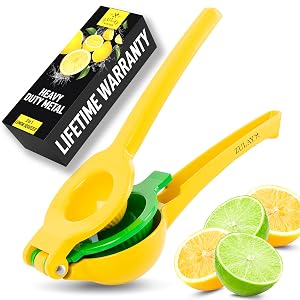
Zulay Kitchen Metal 2-In-1 Lemon Lime Squeezer - Hand Juicer Lemon Squeezer Gets Every Last Drop - Max Extraction Manual Citrus Juicer - Easy-to-Use Lemon Juicer Squeezer Lemon Squeezer Manual
Check price on Amazon →
Zulay Kitchen Cast Iron Juicer - Manual Citrus Press and Lemon Squeezer - Premium Quality Heavy Duty Manual Juicer for Orange Juice and Lime Squeezer, Black
Check price on Amazon →
Braun House Hold CJ3000 Electric Citrus Press, 350 ml Bowl with Scale, Adjustable Pulp Control, Automatic Start/Stop, Cable Storage - White
Check price on Amazon →
Delove Canning Funnel Set for Wide & Regular Mason Jars - Stainless Steel, 3 Pack (Small & Large)
Check price on Amazon →We may earn a small commission, at no cost to you. We only list kit we'd use.
Written by
UK Homesteading Team
Editorial team
The UK Homesteading editorial team, offering UK-specific, evidence-led guidance on growing, keeping, preserving and the law.