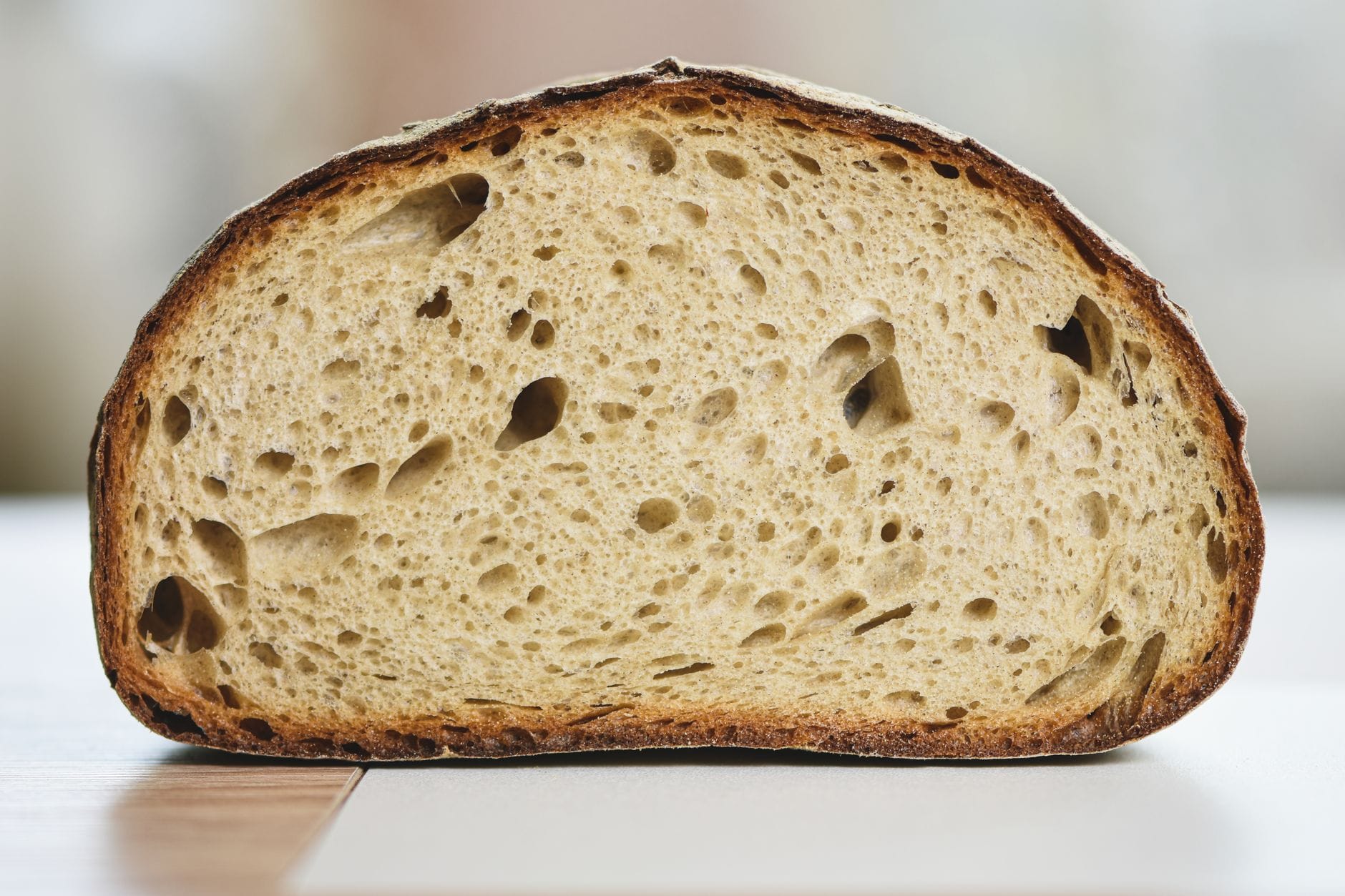
One loaf, one jar of starter and a little patience. This is a forgiving white sourdough with an open crumb and a proper crackle. It is built around an overnight cold proof, so the actual baking happens whenever suits you.
New to keeping a starter? Start with our guide to making a sourdough starter. You will need a lively one for this to work.
An everyday sourdough loaf
Makes 1 large loaf
Prep
40 min
Cook
45 min
Total
1 hr 25 min
Makes
1 large loaf
Ingredients
Method
- 1
Feed your starter the night before, and use it when it has doubled and domed. It should float in a glass of water. If it sinks, give it a few more hours.
- 2
Mix the flour with 340 g of the water until no dry flour is left. Cover and rest for 45 minutes. This is the autolyse, and it builds gluten with no kneading.
- 3
Add the starter, the salt and the last 10 g of water. Squeeze and fold it all through with a wet hand until it is fully combined and a little stretchy.
- 4
Now bulk ferment for 4 to 6 hours at normal room temperature (around 20 °C). In the first 2 hours, do three sets of stretch-and-folds, 30 minutes apart: wet your hand, lift one side of the dough up, fold it over the top, then turn the bowl a quarter and repeat. It is ready when it has risen by roughly half and looks puffy and alive.
- 5
Tip the dough onto a lightly floured surface and fold it into a loose round. Let it rest for 20 minutes, then shape it again into a tight ball, dragging it towards you across the surface to build tension over the top.
- 6
Set it seam-side up in a floured banneton, cover, and put it in the fridge overnight, 12 to 16 hours. This cold proof deepens the flavour and lets you bake whenever suits you.
- 7
When you are ready to bake, put the Dutch oven in the oven with its lid on and heat to 230 °C / 210 °C fan / gas 8 for 30 minutes.
- 8
Turn the cold loaf out onto a piece of baking paper and slash the top about 1 cm deep with a sharp blade. Lower it into the hot pot, paper and all, put the lid on, and bake for 20 minutes. Take the lid off, drop the heat to 220 °C / 200 °C fan / gas 7, and bake for another 20 to 25 minutes, until it is a deep golden-brown. It is done when the inside reads about 96 °C and it sounds hollow when you tap the base.
- 9
Lift it out and cool it completely on a wire rack. At least an hour. It carries on cooking inside as it cools, and cutting it warm gives a gummy crumb. Worth the wait.
Cook’s notes
- Weigh everything. Sourdough is about ratios, and a 10 g swing matters more here than in most baking.
- Warm kitchen? Everything moves faster. Judge the dough by how it looks and feels, not by the clock.
What you’ll need
- Digital scales, sourdough is all about ratios, so cups will not do
- A large mixing bowl
- A banneton (proving basket), or a bowl lined with a well-floured tea towel
- A cast-iron Dutch oven or lidded casserole, the lid traps steam for a good crust; a deep roasting tin with a metal bowl inverted over the top also works
- A lame or a sharp knife, for scoring. A clean razor blade is fine too
A sample schedule
Sourdough is mostly waiting, not working. Here’s how the whole thing fits a normal weekend . Shift it to suit your own days.
Friday, 8 to 9pm
Feed your starter so it is lively and doubled by the morning.
Saturday, ~10am
Check the starter floats, then autolyse the flour and water and leave it 45 minutes.
Saturday, ~11am
Mix in the starter and salt, and start the 4 to 6 hour bulk ferment, with three stretch-and-folds in the first two hours.
Saturday, ~4 to 5pm
Shape the loaf and settle it into a floured banneton.
Saturday evening
Into the fridge for its overnight cold proof, 12 to 16 hours.
Sunday morning
Preheat, score and bake. Then cool it completely before the first slice.
Troubleshooting
My loaf came out flat and spread
Almost always over-proofing or a weak starter. Make sure the starter passes the float test before you begin, and do not push the bulk ferment much past a 50% rise. An over-fermented dough loses its structure.
The crumb is dense and tight, with no open holes
Usually under-proofing, an under-fed starter, or not enough gluten development. Give the bulk ferment longer (judge by the rise, not the clock), keep up the stretch-and-folds, and feed your starter twice on the day before you bake.
It is gummy or sticky when I cut into it
It was cut too soon. A sourdough carries on cooking as it cools, so leave it a full hour on a wire rack. If it is still gummy, it may be slightly underbaked. Add five minutes with the lid off next time.
The crust is pale and soft, not crackly
You need more heat and more steam. Preheat the Dutch oven for a full 30 minutes, keep the lid on for the first 20 minutes to trap steam, then bake uncovered until it is a deep, confident golden-brown.
The loaf tastes bland, not tangy
Flavour comes from time. A longer, cooler ferment builds more sourness. The overnight cold proof does that job, so try stretching it towards 16 hours. A wholemeal or rye starter brings more tang too.
My starter will not rise or float
It is not ready to bake with. Feed it once or twice a day at room temperature until it reliably doubles within 4 to 6 hours of a feed. Cold kitchens slow everything down, so find it a warmer spot.
The dough is a wet, unworkable mess
Wet hands, not more flour. Sourdough is meant to be slack. Use a wet hand for the folds and resist adding flour when shaping. A light dusting on the surface is all it needs.
Frequently asked questions
Kit for this job (Ad)

TempPro TP03H Meat Thermometers with IPX6 Waterproof, Cooking Thermometer | Foldable Temperature Probe with Calibration&Lock Function, Instant Read for Air Fryers, Kitchen, BBQ (Previously ThermoPro)
Check price on Amazon →
Amazon Basics Digital kitchen scales with LCD display (with batteries), Black and Stainless Steel, BPA free, Weighs up to 11 pounds
Check price on Amazon →
TempPro TP19H Digital Meat Thermometer, Food Thermometer, Temperature Probe | Food Probe, Waterproof/Ambidextrous Backlit/Calibration/Lock/Instant Read for BBQ Grill Smoker Fry Jam(Previously ThermoPro)
Check price on Amazon →
TempPro TP19HB Meat Thermometer Probe, Temperature Probe, Food Thermometer | Food Probe, Waterproof/Ambidextrous Backlit/Calibration/Lock/Instant Read for BBQ Grill Smoker Fry Jam(Previously ThermoPro)
Check price on Amazon →We may earn a small commission, at no cost to you. We only list kit we'd use.
Written by
UK Homesteading Team
Editorial team
The UK Homesteading editorial team, offering UK-specific, evidence-led guidance on growing, keeping, preserving and the law.